


What you will learn
1. How phishing works
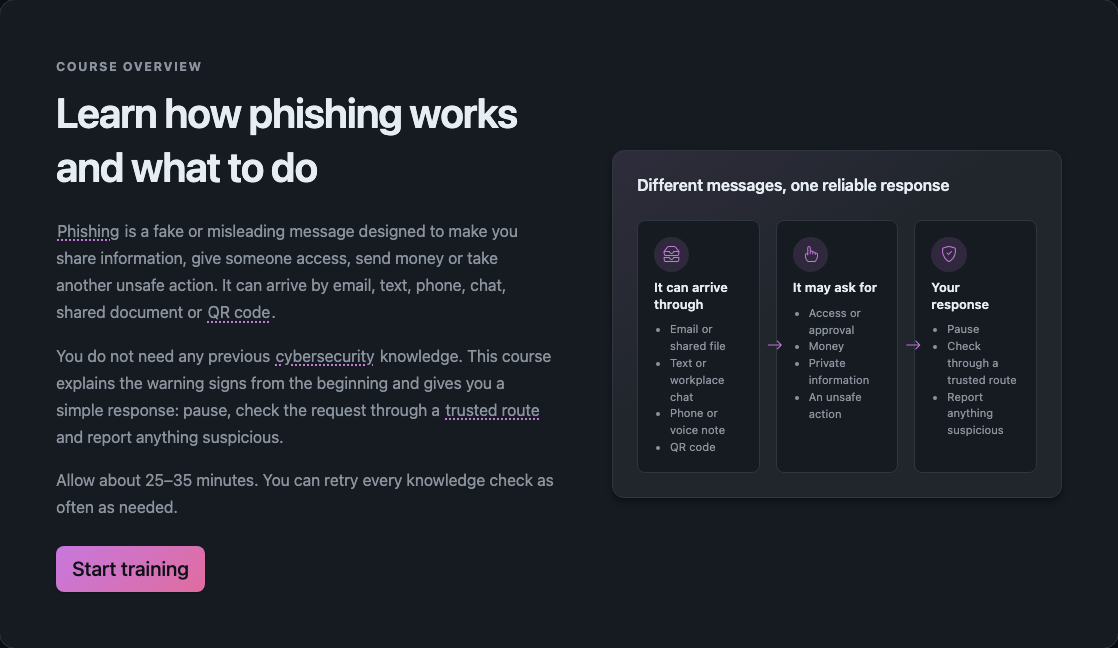
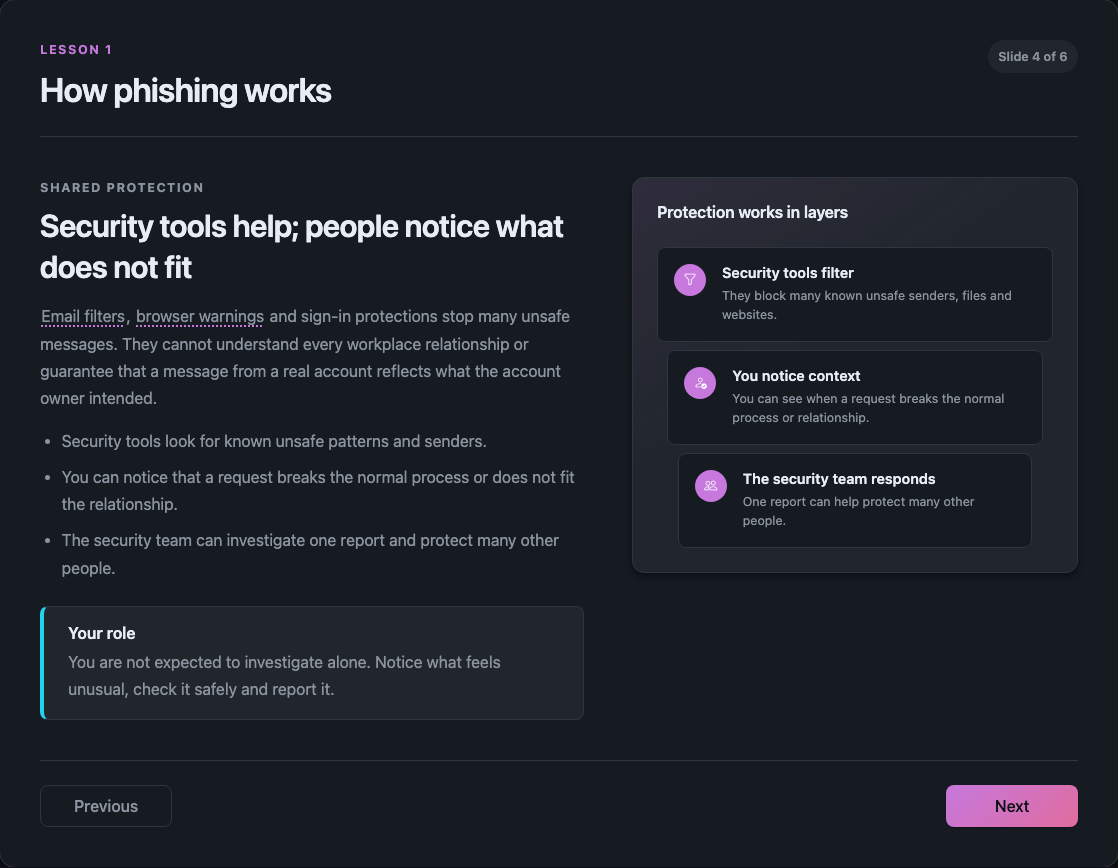
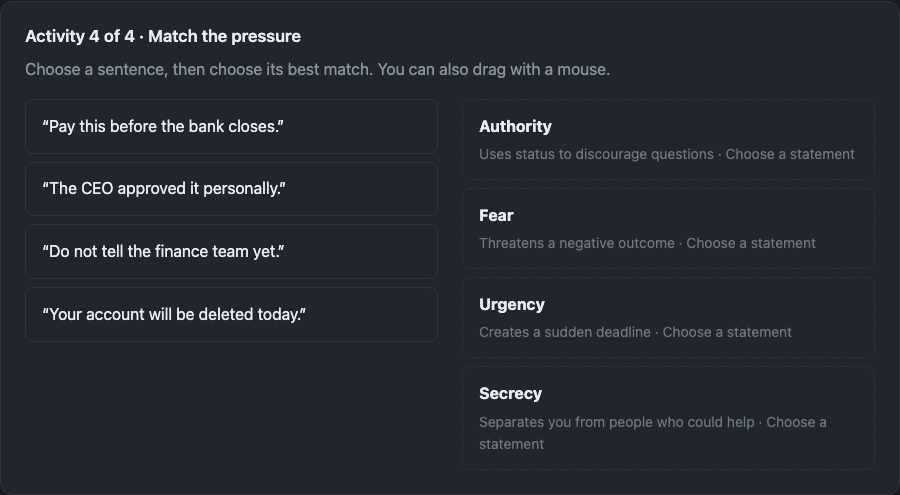
Understand how a message uses a believable story, pressure and a requested action. Learn why a professional appearance or a familiar name is not enough to establish trust.
2. Spot the warning signs
Examine who is contacting you, what they want and whether the request fits. Practise a routine of stopping, thinking, verifying and reporting.
3. Real-world scenarios
Apply your judgement to situations involving invoices, shared files, QR codes, account prompts and voice requests.
4. Report and respond
Learn how to raise a concern and what to explain if you have already interacted with a suspicious request. Follow your organisation's response process where one applies.
5. Keep the habit
Bring the checks together and practise using them consistently when the next unexpected message arrives.