Phishing training for Australian real estate agencies

Help agents, property managers and accounts staff check unexpected payment instructions and shared documents. OutPhish Australia connects practical learning with phishing simulations.

Train for the messages that arrive during a busy property transaction

A property transaction involves buyers, sellers, tenants, owners and several professional advisers. An unexpected email may borrow a familiar name or property address to make a new instruction appear routine.

Phishing awareness gives your team a reason to pause when the requested action changes. Practise checking deposit instructions, supplier details and document links through your agency's normal verification channels.

Explore automated phishing simulations for recurring practice and employee security training for the learning to reinforce between tests.

Explore phishing simulations for your agency

Start a business trial and review how the platform fits your team.

Make the checking routine relevant to each agency role

Use your own procedures to make each discussion specific.

Sales agents

Question unexpected instructions involving deposits, documents and counterparties.

Property managers

Check changes affecting owners, tenants and contractor payments.

Accounts staff

Reinforce the authorisation and verification steps for payment changes.

Administration teams

Inspect unfamiliar document requests and unusual account notices.

Agency principals

Keep the reporting route clear and review recurring areas of uncertainty.

New team members

Introduce the agency's checking process before they handle time-sensitive messages.

Bring agency workflows into phishing training

Practical examples, feedback and a clear next step.

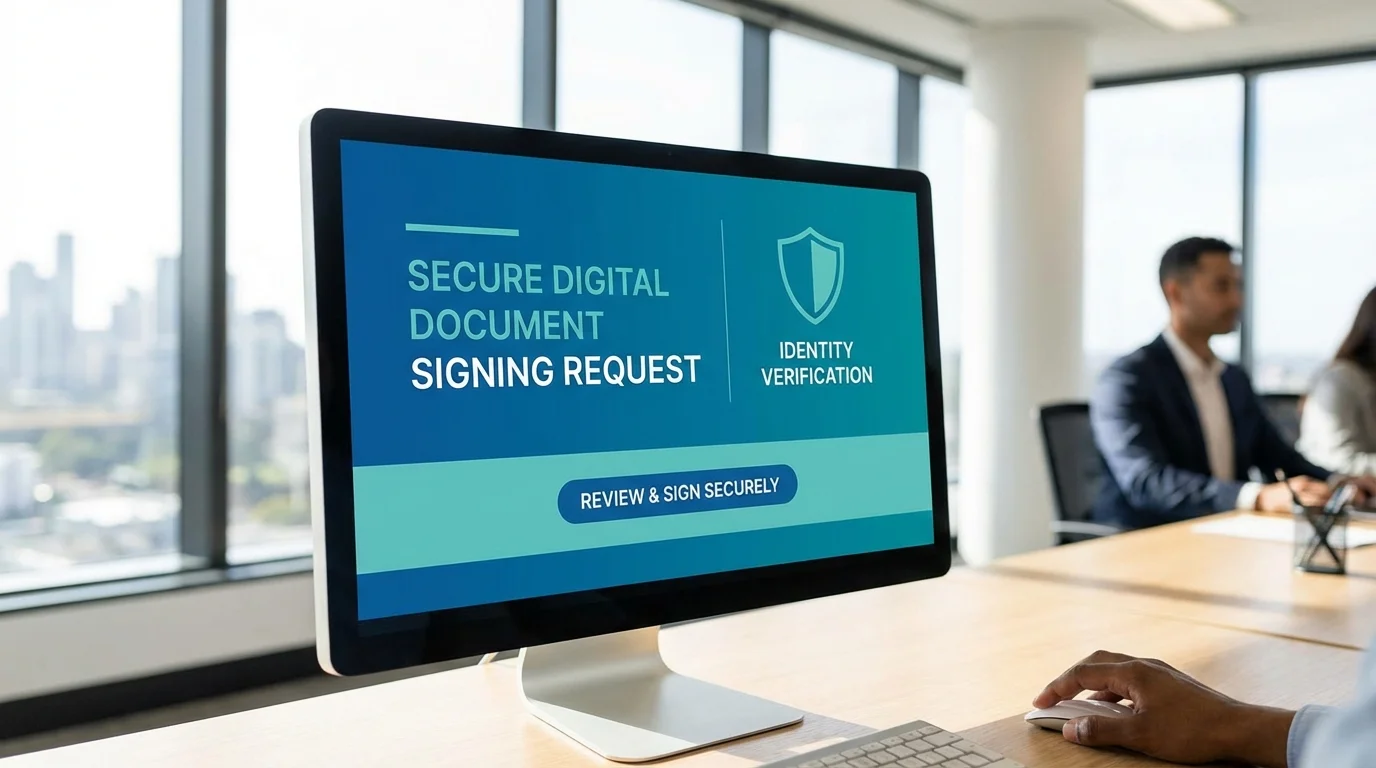
Simulated DocuSign phishing email example

Recognise a plausible property request

Discuss examples such as a shared contract, a changed payment instruction or a notice about a property account. Focus on what the recipient is being asked to do and how they would check it.

Real estate agent checking emails on mobile

Support staff working between appointments

Reinforce the same checking routine whether a message is read at a desk or on a phone. A small screen or a busy schedule should be a reason to slow down before approving an unusual request.

Security compliance dashboard for agency principals

Give principals a useful review point

Use testing and training records to guide follow-up. Review where the agency's verification process is unclear and which teams need further practice.

Three property-workplace situations worth practising

Revised deposit or settlement instructions

A message asks someone to use a different account because the original details have changed. Follow the agency's established checking process and verify through a known contact before acting.

A shared contract or tenancy document

An unexpected link asks the recipient to sign in. Confirm who sent it and access the document through the usual trusted application or exchange process.

A contractor or owner's changed payment details

An email requests an update to a stored bank account. Check the request through an independent channel and follow the required approvals, even when it appears in an existing conversation.

Treat these as illustrative training situations. Staff also need clear procedures for escalating concerns and responding if a message has already been acted on.

For an accessible introduction, share our free phishing awareness course. It is available to any person or organisation.

Questions about phishing training for real estate agencies

It can help staff recognise suspicious instructions and know when to verify them. It does not replace independent checking, payment authorisations or other controls, and it cannot guarantee that a scam will be prevented.

Yes. Property management teams also handle documents, account details and payment requests. Tailor the examples to the responsibilities of each group.

Yes. The public course is open to any person or organisation. Staff can take it directly and request an optional certificate after meeting the completion requirements.

The course explains awareness skills. Simulations create opportunities to practise with messages sent as part of an authorised business training programme.

Help your agency check the next unusual request

Explore OutPhish Australia or discuss a starting point for your team.

Start free